
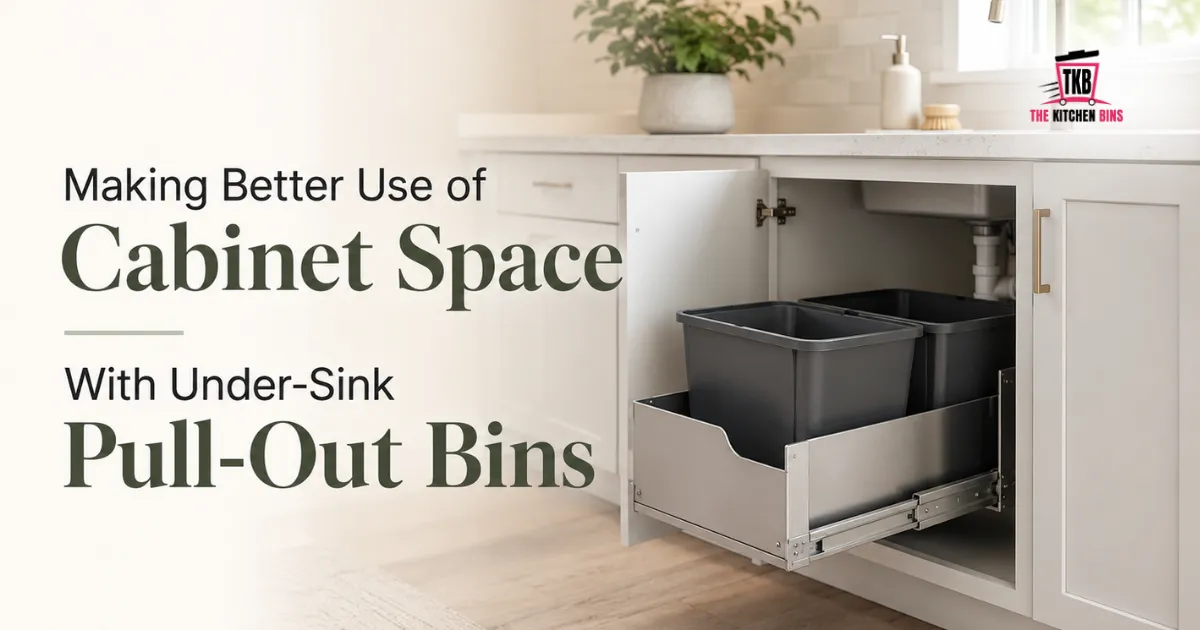
The cupboard beneath the sink often becomes a collection point for cleaning bottles, spare bags and miscellaneous household items. Plumbing makes the space difficult to divide with ordinary shelving, leaving areas unused while the front becomes cluttered.
A well-positioned cupboard bin can give this cabinet a defined everyday purpose. Integrating waste storage also helps keep a freestanding bin out of the main kitchen floor area.
Why Under-Sink Space Is Difficult to Organise
Unlike a standard cabinet, the area beneath the sink has fixed obstacles.
The sink bowl reduces vertical clearance, while the waste pipe frequently occupies the centre or rear. Water connections can further limit where a frame or bucket can be installed.
The solution is to plan around these obstacles rather than treating the cabinet as an empty rectangle.
Measure in Sections
Do not record only one width and height measurement.
Divide the cabinet visually into usable zones and note where plumbing enters those zones. A pull out kitchen bin needs a clear operating path from the rear of the cabinet towards the front.
Pull out kitchen bin planning should include:
-
Internal cabinet width
-
Depth to the rear wall
-
Height beneath the sink
-
Pipe positions
-
Hinge locations
-
Door-opening width
-
Runner installation area
These details can reveal whether the bin is better placed centrally or off to one side.
Why Pull-Out Access Helps
A deep cupboard is inconvenient when frequently used items stay at the rear.
With an under sink pull out bin, the container moves forward for use instead of requiring the user to reach around plumbing.
An under sink pull out bin can also make removing liners easier because the container is brought closer to the cabinet opening.
Movement Clearance Is Critical
Closed dimensions tell only part of the story.
Check every moving component
Runners, frames, lids and buckets may occupy different positions as the system extends. Ensure plumbing and hinges remain outside the full movement path.
Preserve Space for Cleaning Supplies
Using the cabinet for waste does not necessarily mean removing every cleaning item.
Group smaller supplies into narrow containers positioned beside or behind areas that remain accessible. Everyday dishwashing items should be easiest to reach, while rarely used products may be moved to another cupboard.
A cupboard bin works best when the surrounding space is deliberately organised rather than filled with loose bottles.
Choose Capacity From Household Habits
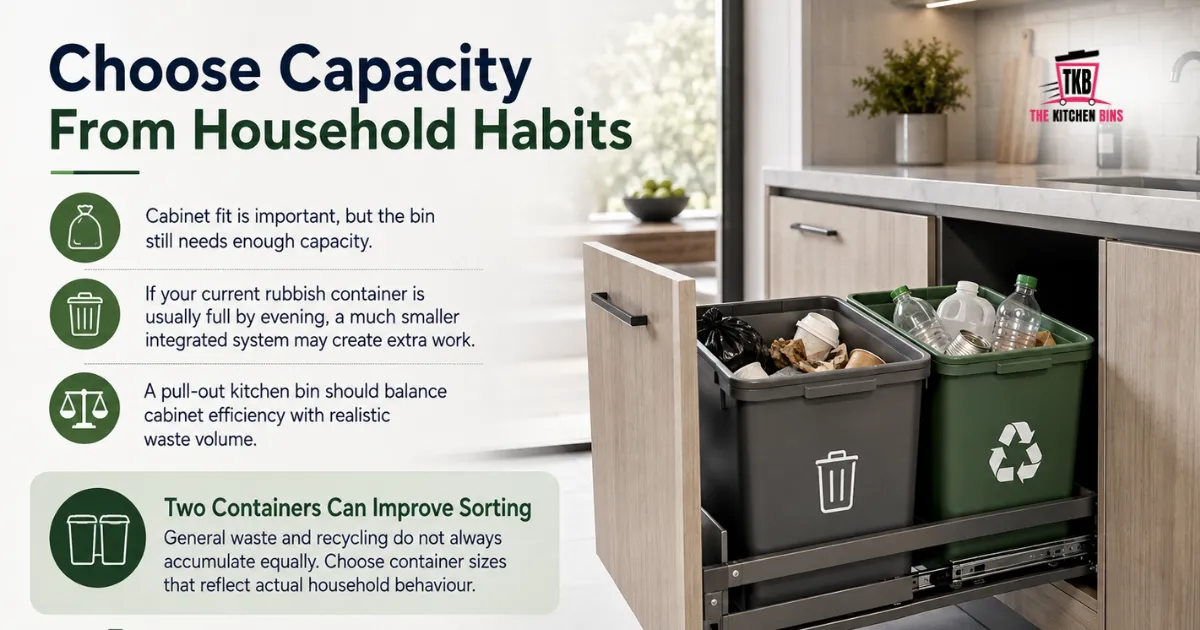
Cabinet fit is important, but the bin still needs enough capacity.
Observe how frequently your existing rubbish container is emptied. If it is normally full by evening, choosing a dramatically smaller integrated system may create extra work.
A pull out kitchen bin should balance cabinet efficiency with realistic waste volume.
Two Containers Can Improve Sorting
Some systems divide the available capacity.
Decide which waste stream needs more room
General waste and recycling do not always accumulate equally. Packaging can be bulky, while food-related waste may be emptied more frequently. Select container sizes that reflect actual household behaviour.
Keep Plumbing Accessible
Do not pack the entire cabinet so tightly that basic plumbing inspection becomes impossible.
Leaks and maintenance issues can occur, and access to pipework is valuable. Where possible, choose a configuration that allows the bin or bucket to be removed without dismantling the complete cabinet interior.
This is another reason careful planning matters before an under sink pull out bin is installed.
Consider the Door and Handle Position
The cabinet door must open enough for the pull-out system to extend fully.
Adjacent handles, corner cabinets or walls can sometimes restrict opening angles. Check this physically before purchasing a system.
If the cabinet is in a tight corner, movement testing is particularly important.
Use the Remaining Space Intentionally
After allocating the waste system, assess what useful space remains.
Possible uses include:
-
Spare bin liners
-
Dishwasher tablets
-
Cleaning cloths
-
Small brushes
-
Frequently used surface cleaner
Avoid storing items where they can fall into the runner mechanism.
Why Choose Us
Kitchen Bins provides cabinet-integrated waste products for homeowners looking to organise kitchen space more effectively. Different categories make it possible to compare systems according to cabinet configuration and preferred opening style.
For an under-sink project, starting with dimensions and plumbing positions helps make the product selection more practical.
About Us
Kitchen Bins focuses on waste-storage solutions designed for installation within kitchen cabinetry. The range supports households seeking alternatives to freestanding bins and ways to use lower cupboards more effectively.
When considering a cupboard bin, shoppers can use cabinet measurements and household waste habits to identify an arrangement that suits the space.
Conclusion
Under-sink cabinets are difficult because they contain fixed obstacles, not because they lack space entirely. A correctly sized pull-out waste system can turn part of that awkward area into storage used every day.
Measure around the plumbing, preserve the bin’s full movement path and organise remaining supplies carefully. These steps can create a cleaner cabinet without sacrificing practical waste capacity.