
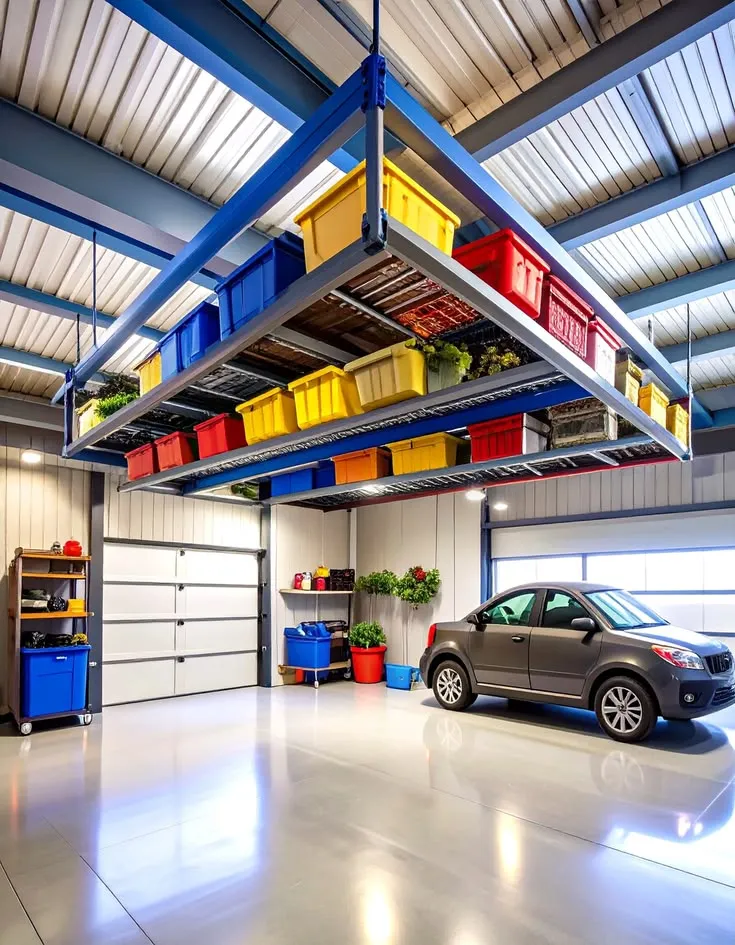
Seasonal gear can take over a garage without anyone noticing. Roof boxes, camping tents, sports equipment and empty travel cases accumulate along walls until parking becomes awkward. Homeowners searching for garage storage solutions near me may be tempted to put everything above the car, but overhead space needs careful planning. Ceiling structures have limits, and frequently used belongings should remain accessible without risky lifting. A sensible storage design balances available space, load capacity and the way household members retrieve items throughout the year.
Choose What Deserves an Overhead Spot
Start by separating equipment into everyday, occasional and rarely used groups. Car-washing supplies and frequently used tools usually belong at reachable heights. Seasonal decorations or spare camping items may be better candidates for higher platforms.
Do not treat every bulky item as suitable for overhead storage. Weight, shape and how securely something can be contained matter. Items that are awkward to lift or liable to roll require special consideration even when they appear light.
Measure More Than Ceiling Height
Garage ceiling space may be interrupted by door tracks, openers, lights, ductwork and access panels. A rack positioned carelessly can interfere with the door or make maintenance difficult.
Measure clearance with the garage door in both open and closed positions. Confirm vehicle height, including roof racks and cargo boxes, before choosing a platform depth. Maintain access to electrical equipment and other building services.
Know the Difference Between Capacity and Support
An overhead rack may advertise a substantial weight rating, but that figure applies only under specified installation conditions. It does not prove the surrounding ceiling structure can support any chosen arrangement.
Professional garage storage installation should account for structural attachment points, fasteners and manufacturer instructions. Never assume that drywall alone can carry loaded shelving. Where the capacity of framing is uncertain, seek an appropriately qualified assessment rather than guessing.
Consider Motorized Access for Bulky Items
Some storage systems use powered platforms that lower belongings toward the floor. They may reduce the need to carry awkward items on a ladder, but their safe operation still depends on correct installation, loading and supervision.
Ask how the controls work, whether the platform includes appropriate safety features and what maintenance is required. Keep children away from moving equipment and never exceed its rated capacity. Motorized access improves convenience; it is not permission to ignore weight limits.
Design a Clear Loading Routine
An overhead system is easiest to use when every container has a predictable location. Keep small items grouped inside secure bins, label their contents and avoid stacking unstable objects above walking routes.
Before installing a system, review:
-
The actual weight of stored items and containers.
-
Clearance above vehicles, doors and workbenches.
-
Whether frequently used gear can be reached safely.
-
The need for secure bins and edge restraints.
-
Who will inspect mounting points and moving components.
These checks should become part of the household routine rather than a one-time installation checklist.
Prepare for Changing Seasons
Toronto households often rotate winter tires, shovels, bicycles and camping equipment. Timing matters because a rack that is convenient in July may be frustrating during a cold February evening.
Place items needed frequently in winter at reachable heights. A simple inventory sheet can show which container belongs to each rack location and when it was last checked. This is especially useful when several family members share the garage and cannot easily see the contents of high shelves. Reserve one accessible area for items needed during unexpected weather. Store damp equipment only after it is cleaned and dried as appropriate. Avoid putting containers directly where leaking water could damage stored belongings or obscure early signs of building moisture problems.
Avoid Turning the Garage Into a Hazard
Overhead space can be valuable, but leaving narrow walkways or overloading wall systems undermines the benefit. Keep heavy tools low, ensure cabinets cannot tip and avoid stacking items against garage-door mechanisms.
Inspect hardware periodically for loose attachments, bending or damage. Stop using a rack if anything appears unstable until the problem has been properly assessed. Storage should make the garage easier to use, not create anxiety whenever someone parks underneath it.
Conclusion
Overhead organization works best when it is planned around real belongings and safe access. The aim is not to fill every available inch, but to free useful floor space without overloading structural supports or making seasonal equipment difficult to retrieve. Homeowners across Toronto and the surrounding GTA can explore shelving, ceiling platforms and installation options at garagestoragetoronto.ca. Careful measurements, responsible loading and regular inspections help keep a garage useful as household storage needs evolve.