
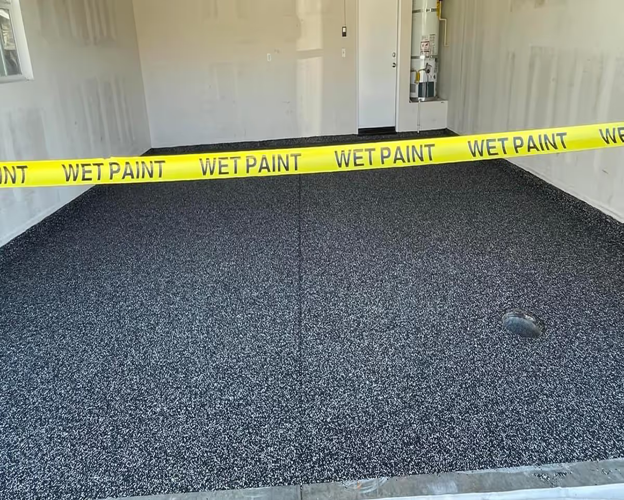
Garages take a real beating every day from warm tires, fluid leaks, dropped tools, and heavy boots. Bare concrete drinks up spilled oil fast, leaving dark spots that you just cannot scrub out later. Putting down a good epoxy floor coating seals up open concrete so spills rest right on top. Sweeping becomes effortless, chemical spills wipe away cleanly, and overall slab strength improves against ongoing surface wear and tear.
Preparing raw concrete slabs
Skipping mechanical surface grinding leads directly to early peeling because liquid resin cannot grip smooth concrete surfaces securely. Heavy industrial vacuum grinders strip away old paint, oil spots, and dirt while opening up tight concrete pores. Deep floor cracks or pitted areas require filling with dense polymer compounds before spreading any liquid primer coats. Proper surface grinding ensures liquid primers penetrate deep into concrete slabs for maximum chemical bonding and long-term durability.
Choosing garage floor systems
Installing a heavy Garage Floor Coating converts dusty work spaces into clean utility areas capable of handling heavy machinery or vehicles. Homeowners can select between plain solid colors, decorative vinyl color flakes, or metallic multi-dimensional designs for unique appearances. Adding decorative color flakes enhances surface traction significantly when walking across floors with wet boots during heavy rainstorms. Solid resin layers block moisture from penetrating concrete slabs, protecting internal steel rebar from developing rust over time.
Managing application weather factors
Shifting ambient temperatures and indoor humidity levels alter liquid chemical curing times significantly during active floor installation phases. Cold winter air slows down chemical reactions, requiring crews to heat workspace areas before pouring any resin down. Hot summer afternoons make liquid resin harden rapidly, forcing application teams to spread materials across floors with extra speed. Proper job site ventilation clears lingering chemical odors while preventing fine airborne dust from settling onto sticky uncured surfaces.
Simple floor care routines
Maintaining sealed garage surfaces takes minimal effort without relying on aggressive power scrubbers or harsh chemical cleansers. Regular sweeping removes loose sand grit that might slowly scratch or dull glossy protective topcoats over extended periods. Soft foam mops soaked in warm neutral soapy water lift tire marks and grease spots effortlessly without damaging resin finishes. Avoiding harsh acidic cleaners preserves shiny protective sheens through many seasons of heavy residential or commercial floor use.
Protecting long-term slabs
Laying down thick protective coatings prevents standing water from soaking into concrete slabs during harsh winter freeze cycles. Unprotected concrete crumbles when trapped moisture expands into ice, but sealed surfaces keep water completely out of the slab. Hot automobile tires will not lift high-quality two-component liquid resins like cheap hardware store paint kits often do. Investing in commercial liquid coatings pays off long-term by eliminating expensive structural concrete repairs down the road.
Conclusion
Partnering with experienced local installers ensures concrete slabs get properly tested for hidden moisture issues before pouring liquids. Rhynopoxycoatings.com connects property owners with heavy-duty surface systems engineered specifically for demanding local climate conditions and daily usage demands. Experienced installation crews use commercial dust-vacuum grinders and industrial resins to construct floors that withstand severe daily wear. Contact our friendly team today to review your project goals and request a detailed estimate for your space.